..HADAPLAH WAJAH MU KE MANA-MANA DI SITU ADA TUHAN..

SALAM UKHUWWAH

Kepada mereka yg sudi menjenguk blog ini ambo ucapkan terima kasih. Blog ini tidaklah sehebat blog2 yang lain. Ambo hanya sekadar ingin mencari teman dan berkongsi pengetahuan serta pengalaman dalam segenap bidang. Sekiranya ada sebarang komentar atau teguran silalah kemukakan, semoga ianya bermanafaat buat diri ini.


...AHLAN WASAHLAN..TERIMA KASIH KERANA SUDI BERKUNJUNG KE BLOG AMBO...

Terima KasiH KeRana Like bloG ni..^^

GenG

Thursday, May 17, 2012

Birding l Oriental Darter

Panjang betul dia punya leher..leher dia tu sekali tengok macam ular pn ada. Orang kita panggil burung ni burung Kosa.

The Oriental Darter or Indian Darter (Anhinga melanogaster ), sometimes called Snakebird, is a water bird of tropical South Asia and Southeast Asia.  The Oriental Darter is a member of the darter family, Anhingidae, and is closely related toAmerican (Anhinga anhinga), African (Anhinga rufa), and Australasian (Anhinga novaehollandiae) Darters.-http://en.wikipedia.org/wiki/Oriental_Darter 

Exif:
Lokasi: Pulau Banggi, Sabah
Date: April 2012
Exposure: 1/500 at f/8, ISO320
Exposure Bias: -0 EV
Exposure Mode: Aperture Priority
Metering Mode: Spot
White balance: Auto
Flash: No
Focal Length: 500mm
Camera & Lens: Nikon D90 + Sigma 150-500mm
Image Quality: jpeg Fine


Tuesday, May 15, 2012

Selamat Hari Guru

"GURU INOVATIF MELONJAKKAN TRANSFORMASI PENDIDIKAN NEGARA"

Selamat Hari Guru kpd semua pendidik di SK Karakit Banggi khususnya dan semua guru di seluruh Malaysia amnya..jasa dan pengorbananmu wahai guru akan daku kenang selamanya..

Gambar staf SK Karakit sesi 2011..sekadar hiasan..

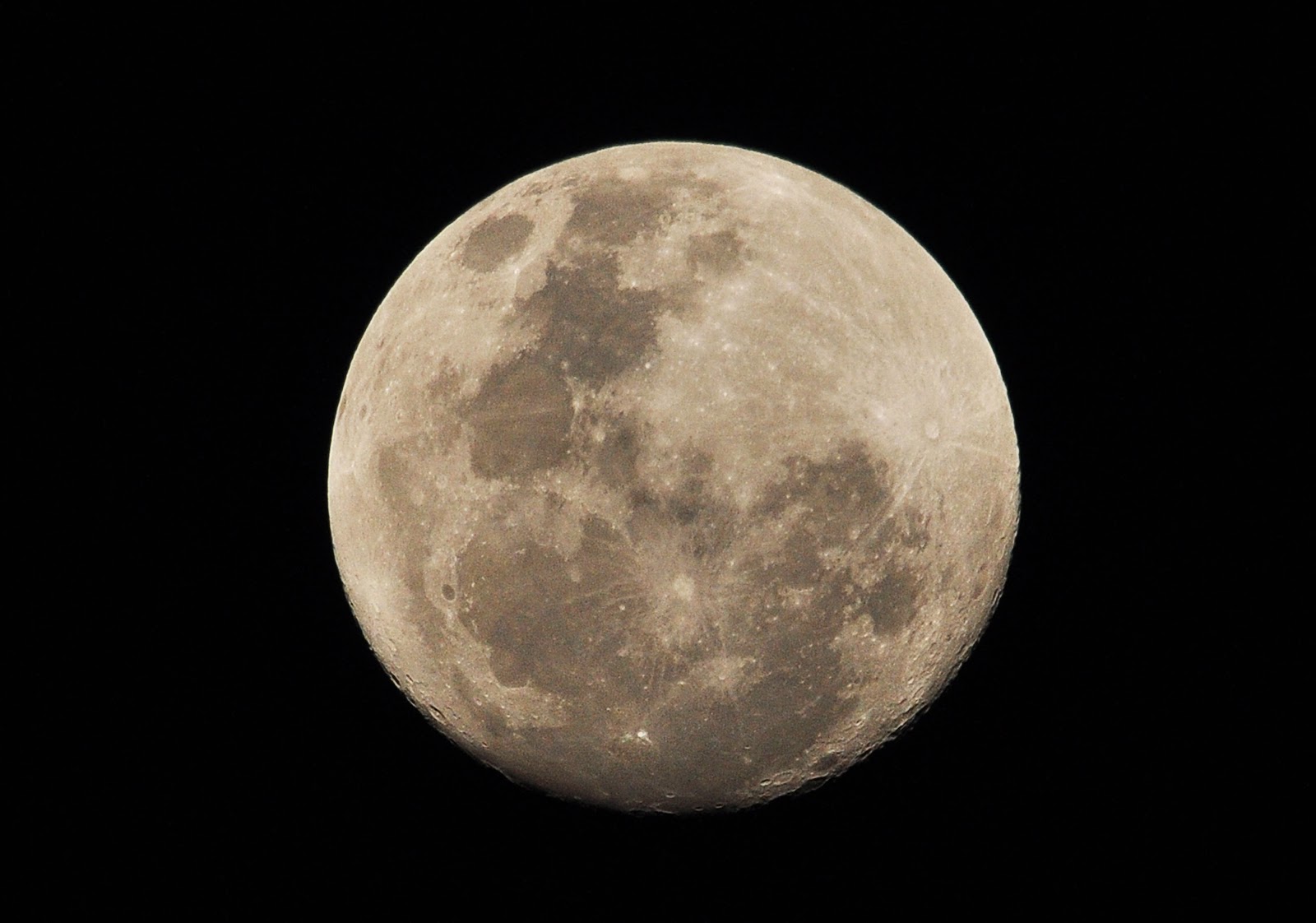
Banggi Island l Moon

Lama tak ambil gambar bulan..sekadar menghilangkan boring..tambahan pulak dah takdak idea nak menulis..sekadar meng'update' blog..sebelum ni ambo membulan menggunakan lens tamron 70-300..sekarang ambo sudah upgrade lens ke sigma 150-500..dgn zoom yg lebih panjang(berbanding sebelum ni) jd hasilnya sedikit berbeza..agak berpuas hati jgklah walaupn hasilnya tdklah seberapa..^^


Saturday, May 12, 2012

Banggi Island l Chameleon

Chameleons (family Chamaeleonidae) are a distinctive and highly specialized clade of lizards. They are distinguished by their parrot-like zygodactylous feet, their separately mobile and stereoscopic eyes, their very long, highly modified, and rapidly extrudable tongues, their swaying gait, the possession by many of a prehensile tail, crests or horns on their distinctively shaped heads, and the ability of some to change color. Colors include pink, blue, red, orange, turquoise, yellow, and green.-http://en.wikipedia.org/wiki/Chameleon


Monday, May 7, 2012

Birding l Eurasian Tree Sparrow

The Eurasian Tree Sparrow (Passer montanus) is a passerine bird in the sparrow family with a rich chestnut crown and nape, and a black patch on each pure white cheek. The sexes are similarly plumaged, and young birds are a duller version of the adult. This sparrow breeds over most of temperate Eurasia and Southeast Asia, where it is known as the Tree Sparrow.-http://en.wikipedia.org/wiki/Eurasian_Tree_Sparrow

Exif:
Camera Model: Nikon D90
F- stop: F/8
Exposure time: 1/320sec
ISO Speed: ISO320
Exposure program:A
Exposure Bias: -0.3 step
Focal length: 500mm
Metering mode:spot
White balance:Auto
Lens:Sigma 150-500
Flash: No
Handling: Handheld


Friday, May 4, 2012

Wednesday, May 2, 2012

Birding l Welcome Swallow

The Welcome Swallow is metallic blue-black above, light grey below on the breast and belly, and rusty on the forehead, throat and upper breast. It has a long forked tail, with a row of white spots on the individual feathers. These birds are about 15 cm (6 in) long, including the outer tail feathers which are slightly shorter in the female. The call is a mixture of twittering and soft warbling notes, and a sharp whistle in alarm.
Young Welcome Swallows are buffy white, instead of rufous, on the forehead and throat, and have shorter tail streamers.Rujukan@ http://en.wikipedia.org/wiki/Welcome_Swallow

Exif:
ID: Welcome Swallow
Loc : Sabah
F-stop: f/8
Exposure time: 1/320sec at ISO 400
White Balance : Auto
Exposure Program : Aperture Priority
Metering Mode : Spot
Flash : No Flash
Focal Length : 500mm
Camera : D90+sigma 150-500mm


Lukisan Alam l Sunset@ Banggi

Kg Lok Tuhog in memory..

D90+Tammy 17-50mm vc+Filter Tianya
M  I  8sec  I  f13  I  iso Lo01


Friday, April 27, 2012

Birding l Indian Cuckoo

This is a medium sized cuckoo with both sexes alike. It has grey upperparts while the underside has broad black barring. The tail is barred with a broad subterminal dark band and a white tip. Young birds have white markings on the crown and white chin and throat contrasting with a dark face. Juveniles are browner and have broad white tips to the head and wing feathers. The eye-ring is gray to yellow (a feature shared with the Common Hawk-Cuckoo). The iris is light brown to reddish. The female differs from the male in being slightly paler grey on the throat and in having more brown on the breast and tail. The barring on the belly is narrower than in the male. Nestlings have an orange-red mouth and yellow flanges to the gape.- rujukan@ http://en.wikipedia.org/wiki/Indian_Cuckoo

Gambar kurang jelas sebab terlindung di sebalik daun..lalang pn tinggi-tinggi hampir sama tinggi dgn ambo..huhu..kena redo semula..

ID: Indian Cuckoo..main sorok2 tepi hutan..^^
Loc : tepi rumah kawan
F-stop: f/8
Exposure time: 1/320sec at ISO 500
White Balance : Auto
Exposure Program : Aperture Priority
Metering Mode : Spot
Flash : No Flash
Focal Length : 500mm
Camera : D90+sigma 150-500mm


Close up l Macro l Banggi Island l Lady n antz

World is all about sharing..caring..giving..n loving..


Thursday, April 19, 2012

Birding l Sunda Pygmy Woodpecker P1

The Sunda Woodpecker (Dendrocopos moluccensis), also known as the Sunda Woodpecker, is a species of bird in the Picidae family. It is found in Brunei, Indonesia, Malaysia, and Singapore. Its natural habitats are subtropical or tropical moist lowland forests, subtropical or tropical mangrove forests, and subtropical or tropical moist montane forests.-rujukan

Date: 13 April 2012
Location:Sabah
Exposure: 1/100s at f6.3 ISO500
Exposure Mode: Programmed Auto
Metering Mode: Spot
Focus mode: Manual
Focal Length: 350-500mm
Camera : Nikon D90
Lens: Sigma APO 150-500mm
Image Quality : JPEG


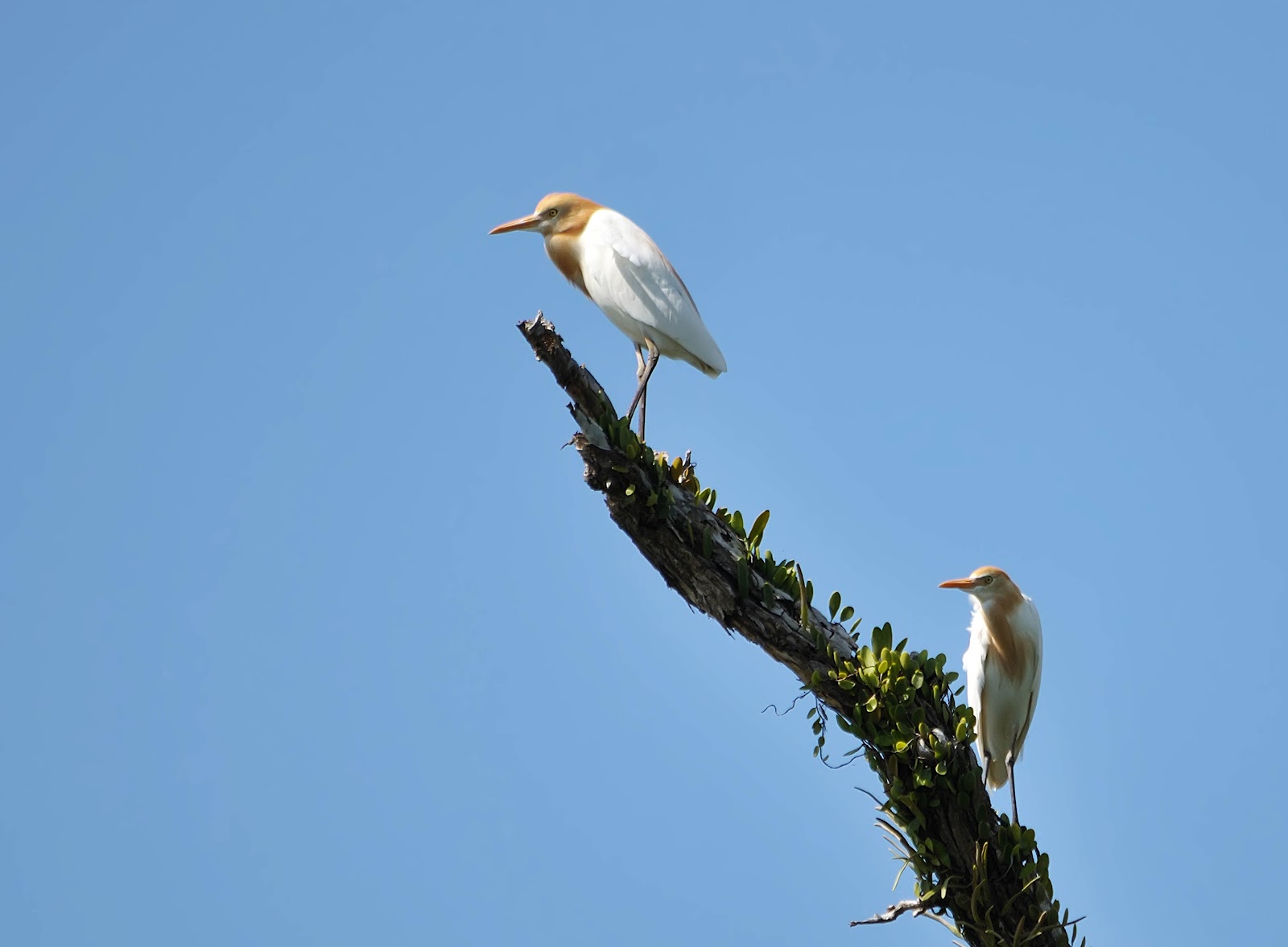
Birding l Cattle Egret

The Cattle Egret (Bubulcus ibis) is a cosmopolitan species of heron (family Ardeidae) found in the tropics, subtropics and warm temperate zones. It is the only member of the monotypic genus Bubulcus, although some authorities regard its two subspecies as full species, the Western Cattle Egret and the Eastern Cattle Egret. Despite the similarities in plumage to the egrets of the genus Egretta, it is more closely related to the herons of Ardea. Originally native to parts of Asia, Africa and Europe, it has undergone a rapid expansion in its distribution and successfully colonised much of the rest of the world.

It is a white bird adorned with buff plumes in the breeding season. It nests in colonies, usually near bodies of water and often with otherwading birds. The nest is a platform of sticks in trees or shrubs. Cattle Egrets exploit drier and open habitats more than other heron species. Their feeding habitats include seasonally inundated grasslands, pastures, farmlands, wetlands and rice paddies. They often accompany cattle or other large mammals, catching insect and small vertebrate prey disturbed by these animals. Some populations of the Cattle Egret are migratory and others show post-breeding dispersal.

The adult Cattle Egret has few predators, but birds or mammals may raid its nests, and chicks may be lost to starvation, calcium deficiency or disturbance from other large birds. This species maintains a special relationship with cattle, which extends to other large grazing mammals. The cattle egret removes ticks and flies from cattle and consumes them. This benefits both species, but it has been implicated in the spread of tick-borne animal diseases.-rujukan


Exif:
Date: 08 April 2012
Camera: Nikon D90
Lens: Sigma APO 150-500mm
Aperture: f8
Shutter Speed:1/1250s
ISO Sensitivity: 250
Focus Mode: AF-S
Metering: Center Weighted
Focal Length: 500mm


Saturday, April 14, 2012

Birding l Black-headed Munia

Black-headed Munia, Lonchura atricapilla (formerly considered as a subspecies of the Tricoloured Munia Lonchura malacca atricapilla) also known as Chestnut Munia, is a small passerine bird. The Black-headed Munia is a small gregarious bird which feeds mainly on grain and other seeds. It frequents open grassland and cultivation. The nest is a large domed grass structure in a bush or tall grass into which 4-7 white eggs are laid.-rujukan

Exif:
Date: 13 April 2012
Camera: Nikon D90
Lens: Sigma APO 150-500mm
Aperture: f8
Shutter Speed:1/200s
ISO Sensitivity: 320
Focus Mode: Manual
Metering: Center Weight
Focal Length: 500mm


Tuesday, April 10, 2012

Birding l Brown Shrike

   The Brown Shrike (Lanius cristatus) is a bird in the shrike family that is found mainly in Asia. It is closely related to the Red-backed Shrike (L. collurio) and Isabelline Shrike (L. isabellinus). Like most other shrikes, it has a distinctive black "bandit-mask" through the eye. and is found mainly in open scrub habitats, where it perches on the tops of thorny bushes in search of prey.
   This shrike is mainly brown on the upper parts and the tail is rounded. The black mask can be paler in winter and has a white brow over it. The underside is creamy with rufous flanks and belly. The wings are brown and lack any white "mirror" patches. Females have fine scalloping on the underside and the mask is dark brown and not as well marked as in the male.-rujukan

Exif:
Camera: Nikon D90
Lens: Sigma APO 150-500mm
Aperture: f7.1
Iso sensitivity: 800
Shutter speed: 1/320s
Metering: Center weight


Monday, April 9, 2012

Mati oH Mati

Sebelum berlakunya kiamat besar (dunia) Allah akan perlihatkan kita dgn banyak tanda2 dari tanda yg kecil hinggalah tanda2 yg besar..tapi kiamat kecil (mati) bagi setiap hamba itu Allah tidak zahirkan tanda2nya melainkan kpd mereka2 yg terpilih..sbb tu kita kena sentiasa ambil peringatan dan berjaga-jaga..mati itu pasti, bila dtg waktunya tdk akan dipercepatkan ia walau sesaat dan tidak dilewatkan walau sesaat..